
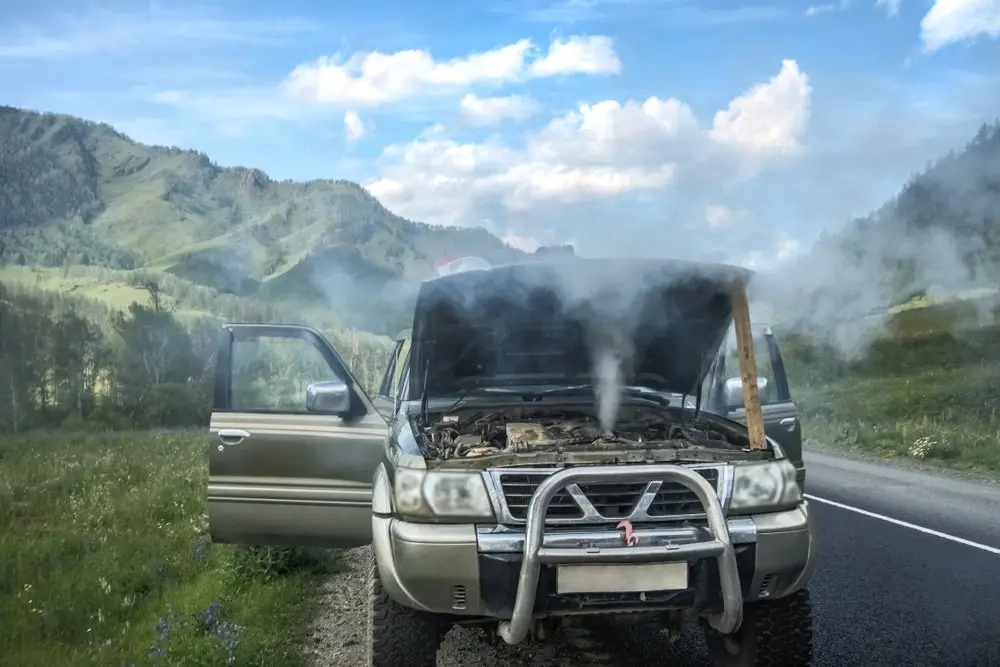


It’s that time of year again! An overheating engine is a telltale sign that we are in the thick of summer heat. NO ONE enjoys that stress-riddled moment of seeing that big red “H” on your engine as smoke starts to rise from below the hood – especially if you’re in the middle of a road trip of somewhere with minimal access to services. Not only is it inconvenient, it can pose a major safety concern when you break down in the middle of nowhere with no cell connection or gas station in sight.
How to Reduce Likelihood of Engine Overheating
It’s important to know what to do when your engine overheats to protect from further damage and keep yourself safe. Before we dive into that, let’s first cover important steps you can take NOW to prevent yourself from ever being caught in this situation.
Check your radiator cap for damage
Check your car’s coolant levels regularly
Keep a check on the temperature gauge
Turn off the AC to reduce engine load if you notice temperature gauge rising
Check for coolant leaks regularly
Get your radiator flushed periodically
Keep a check on the thermostat to ensure it’s not faulty
Have your drive belt inspected for any wear and tear
How to Prevent Damage When Your Engine Overheats
In the unfortunate event that your engine DOES start to overheat, here are 5 steps to take to minimize the damage before you can get it into a shop.
Get off the road as fast as possible and call for a tow truck. We highly recommend getting an AAA card and keeping one on hand. It’s also a good idea to have a 2 way GPS communication device if you’re planning on going into areas that don’t have cell service.
Turn off the AC immediately after noticing your engine starting to overheat
Turn on your defroster and your heater to hot with the fan on HIGH. This will pull as much heat out of your engine as it can. It may seem like a small, simple step, but this could make the difference between completely destroying your engine and just doing a little damage
If you’re in the flow of traffic when your engine overheats, put your car in neutral or park and raise the engine speed by pressing the gas pedal just enough to get up to about 2000 RPMs. This will help to get the coolant circulating.
If you’re moving, put the car into the lowest gear that will maintain between 2-3 on the RPM gauge as you are heading to a good spot to pull over. The goal is to remain in the 2,000 – 3,000 RPM range.
What Causes an Engine to Overheat
If your vehicle is overheating, your engine is screaming for attention and your cooling system needs help. Some of the most common reasons for an engine to overheat include:
- Leaks in the cooling system
- Poor coolant concentration
- Faulty thermostat
- Bad radiator
- Worn out/burst hoses
- Bad radiator fan
- Loose or broken belts
- Bad water pump
An overheating engine is a sign that your vehicle needs IMMEDIATE attention. In most cases the original cause is a simple, low-cost repair that was put off too long. Make sure to take advantage of our engine services with high quality BG performance products, as well as our current special for $25 off any engine service between now and September 15, 2023.
If your vehicle is showing signs of overheating, be sure to give us a call today and we’ll be happy to test and assess the vehicle, provide the proper service and repairs and get you back on the road as quickly as possible.