


The holidays are here, which means festive lights, family time, and—for many—long hours on winter roads. Whether you’re driving across town or across the state, cold weather places extra stress on your vehicle. A quick winter readiness check can make the difference between a smooth trip and one that’s interrupted by roadside trouble.
Before you pack the presents and crank up the Christmas playlist, take a few minutes to make sure your car is truly ready for holiday travel. Here’s a mechanic-approved checklist to help keep you safe, warm, and worry-free this season.
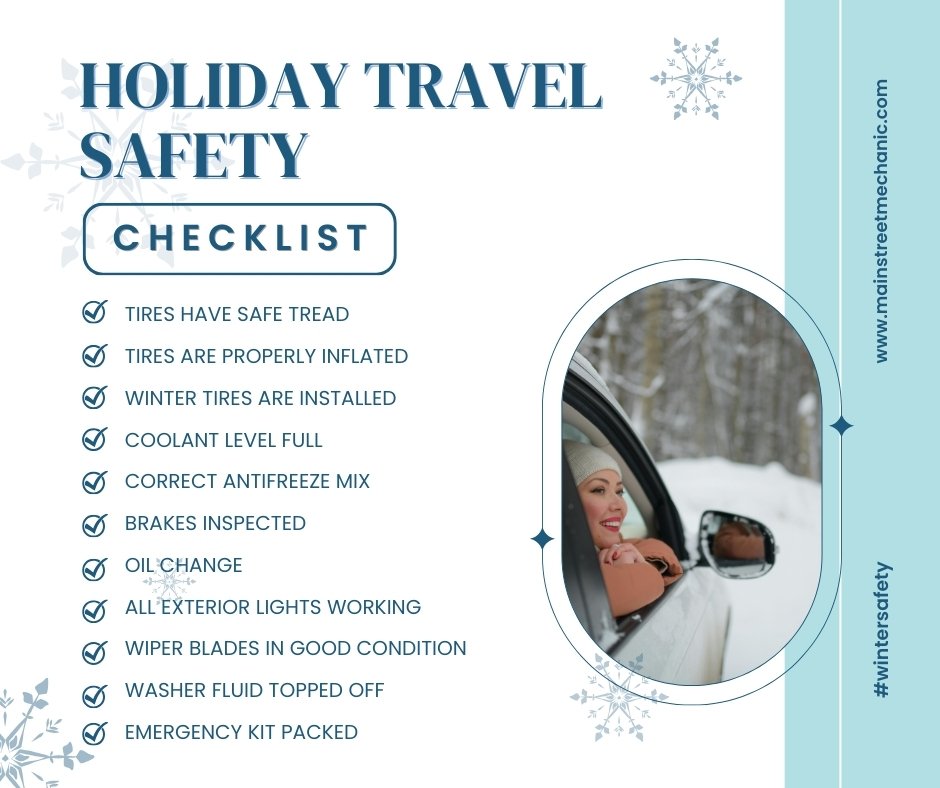
1. Check Your Tire Tread and Consider Winter Tires
Your tires are the only part of your car that actually touches the road, which makes them incredibly important in snow and ice.
Here’s what to look at:
- Tire tread depth: You want at least 4/32” for winter driving. If you’re unsure, try the “quarter test”—insert a quarter into the tread with Washington’s head upside down. If you can see the top of his head, your tread is too low.
- Uneven wear: This may indicate alignment or suspension issues that can affect handling on slippery roads.
- Proper inflation: Tire pressure drops in cold weather—usually 1 PSI for every 10° decrease. Low pressure reduces traction and increases tire wear.
- Winter tires: If you regularly drive in snow, dedicated winter tires offer dramatically better grip, braking, and control compared to all-season tires.
A tire check takes just a few minutes and is one of the biggest safety boosts you can give yourself in winter.
2. Inspect Coolant Levels and Antifreeze Strength
Your engine works hard during winter travel, and coolant plays a big role in keeping it at a safe temperature.
Before hitting the road:
- Check that your coolant reservoir is filled to the recommended level.
- Make sure you’re using the right antifreeze mixture—generally a 50/50 mix protects down to about -30°F.
- If it’s been more than 2–3 years since your last coolant flush, consider scheduling one. Old coolant can lose its ability to prevent freezing or corrosion.
If your heat isn’t warming up like it used to, or if you smell something sweet under the hood, have your cooling system checked before a long trip.
3. Verify Your Brakes Are Ready for Winter Roads
Cold weather, wet pavement, and icy surfaces all make braking distance longer. That’s why a winter brake check is crucial.
Ask your mechanic to inspect:
- Brake pads and rotors for thickness and wear
- Brake fluid level — low fluid can signal pad wear or a leak
- ABS system to ensure it engages correctly
- Brake responsiveness — any grinding, squeaking, or vibration should be addressed ASAP
If you’re driving into mountainous or icy areas, brakes in top condition are non-negotiable.
4. Get an Oil Change If You’re Due (or Almost Due)
Cold weather thickens engine oil, making it harder for your engine to warm up and perform efficiently. Fresh oil helps your vehicle run smoother, especially on long highway trips.
Before holiday travel:
- Check your dashboard sticker or vehicle app to see when you’re due.
- If you’re within 500 miles of needing an oil change, it’s smart to get it done beforehand.
- Make sure your mechanic uses the manufacturer-recommended viscosity for winter temperatures.
Fresh oil protects your engine—and gives you peace of mind on winter roads.
5. Prepare or Update Your Winter Emergency Kit
Even with the best preparation, winter weather can be unpredictable. Having an emergency kit can turn a stressful situation into something manageable.
A well-stocked winter kit should include:
- Blanket or emergency thermal blanket
- Jumper cables or jump pack
- Flashlight + extra batteries
- Ice scraper and snow brush
- Water bottles
- Energy bars or long shelf-life snacks
- First-aid kit
- Tire pressure gauge
- Gloves, hat, and hand warmers
- Roadside flares or reflective triangles
- Portable phone charger
If you’ll be traveling into remote or snowy areas, consider adding traction boards, a small shovel, and tire chains.
6. Make Sure Your Lights and Windshield Visibility Are Perfect
Visibility is one of the most overlooked but important parts of winter travel.
Check all front and rear bulbs, including:
- Headlights
- Fog lights
- Brake lights
- Reverse lights
- Turn signals
If your headlights look cloudy or yellow, a quick restoration can dramatically improve nighttime visibility.
Also check:
- Wiper blades — if they leave streaks or chatter across the glass, replace them
- Washer fluid — use winter fluid that won’t freeze
- Windshield cracks — cold temperatures can cause them to spread quickly
Seeing clearly keeps you safe—and helps others see you.